All articles
Digital Marketing·
8 min20 Jun 2026
·CoreMedia Editorial Team

The Reach–Revenue Gap: Morocco's Digital Marketing Paradox

A data-driven analysis of the structural disconnect between consumer connectivity and business monetisation in the Moroccan digital economy.

Smartphone displaying social media and banking apps resting on physical Moroccan Dirhams representing the reach-revenue gap.

Abstract

Morocco presents one of the most striking anomalies in emerging-market digital development: a consumer base that has reached near-European connectivity levels, with 92.2% internet penetration, 22.8 million social media identities, and near-universal WhatsApp usage, yet a business base where 77% of SMEs still do not accept digital payments. This article introduces the concept of the Reach–Revenue Gap to describe this structural inversion, benchmarking Morocco against comparable markets.

1. Introduction

Digital marketing theory has long assumed that consumer adoption and business commercialisation rise together: as audiences move online, businesses follow, and a mature marketing ecosystem emerges. Morocco challenges this assumption in a way no comparable market does. By early 2026, Morocco had achieved connectivity metrics that rival southern European nations, yet its commercial digital infrastructure remained at an early-emerging-market stage.

This divergence is not a temporary lag. It is a structural feature of the Moroccan digital economy, produced by the intersection of mobile-first leapfrogging, linguistic fragmentation, cash-dominance in retail payments, and a small-business fabric that conflates presence on social media with genuine digital transformation.

2. The Digital Landscape: Consumer Connectivity Data

Morocco entered 2026 with a digital consumer base that would not look out of place in a high-income economy. According to the DataReportal Digital 2026: Morocco report, the country recorded 35.5 million internet users, representing an internet penetration rate of 92.2% of the total population.

Key Connectivity Metrics (2026)

• Internet penetration: 92.2% • Internet users: 35.5M • Social media identities: 22.8M • Social media penetration: 59.1%

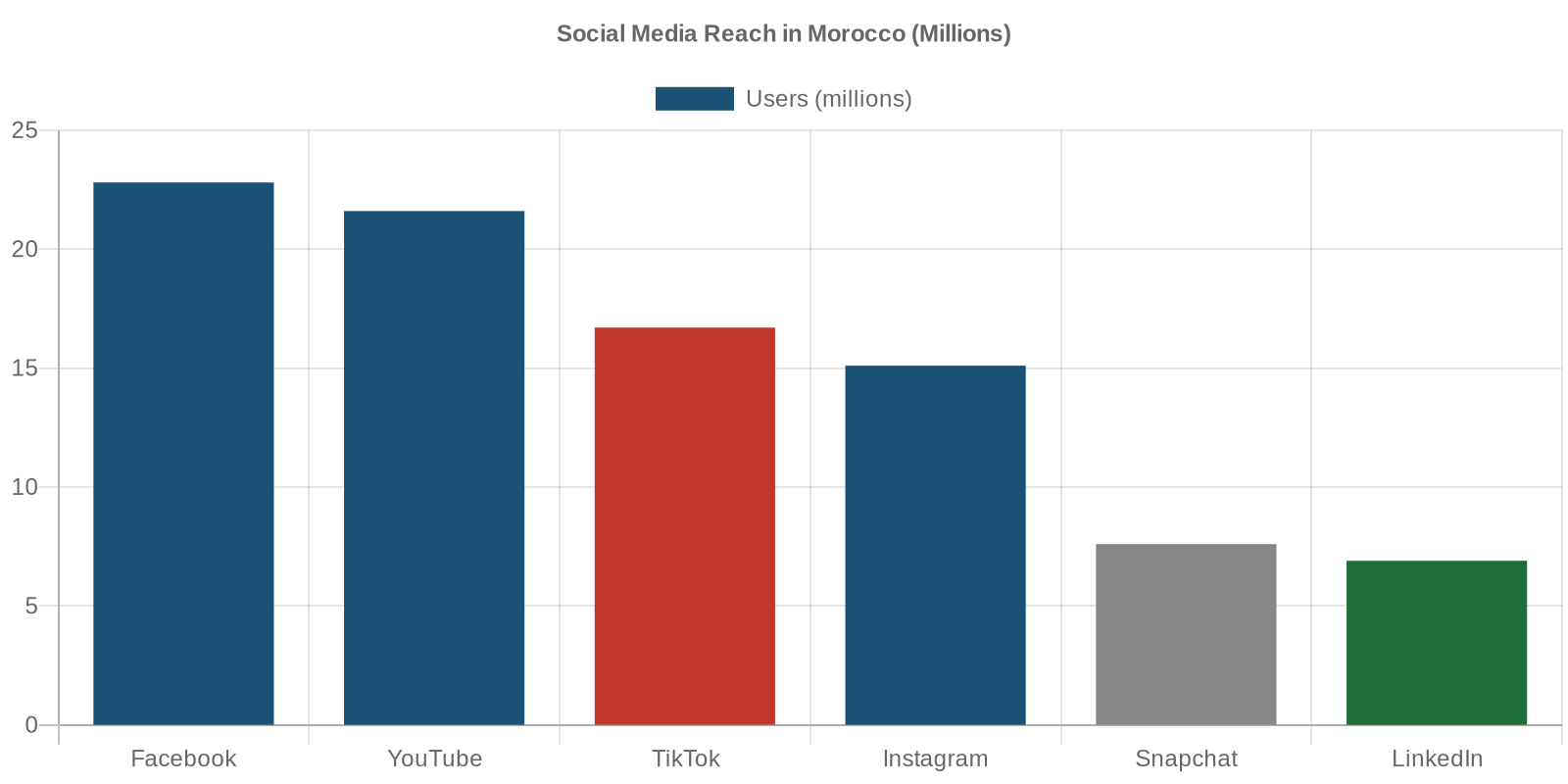
The platform hierarchy merits careful reading. Facebook retains the largest audience at an estimated 22.8 million users. YouTube reaches 21.6 million adults. TikTok's adult audience grew approximately 19% in a single year to 16.7 million, while Instagram reached 15.1 million.

Social media platform reach in Morocco
Figure 1: Social media platform reach in Morocco, 2025–2026 (millions of users)

3. The Reach–Revenue Gap: Theoretical Framework

Standard digital-marketing maturity models assume parallel progression on the consumer and business sides of the market. Morocco invalidates this assumption.

Definition, The Reach–Revenue Gap: A structural condition in which consumer-side digital connectivity significantly outpaces business-side commercial monetisation, producing a market characterised by high audience reach but low conversion efficiency.

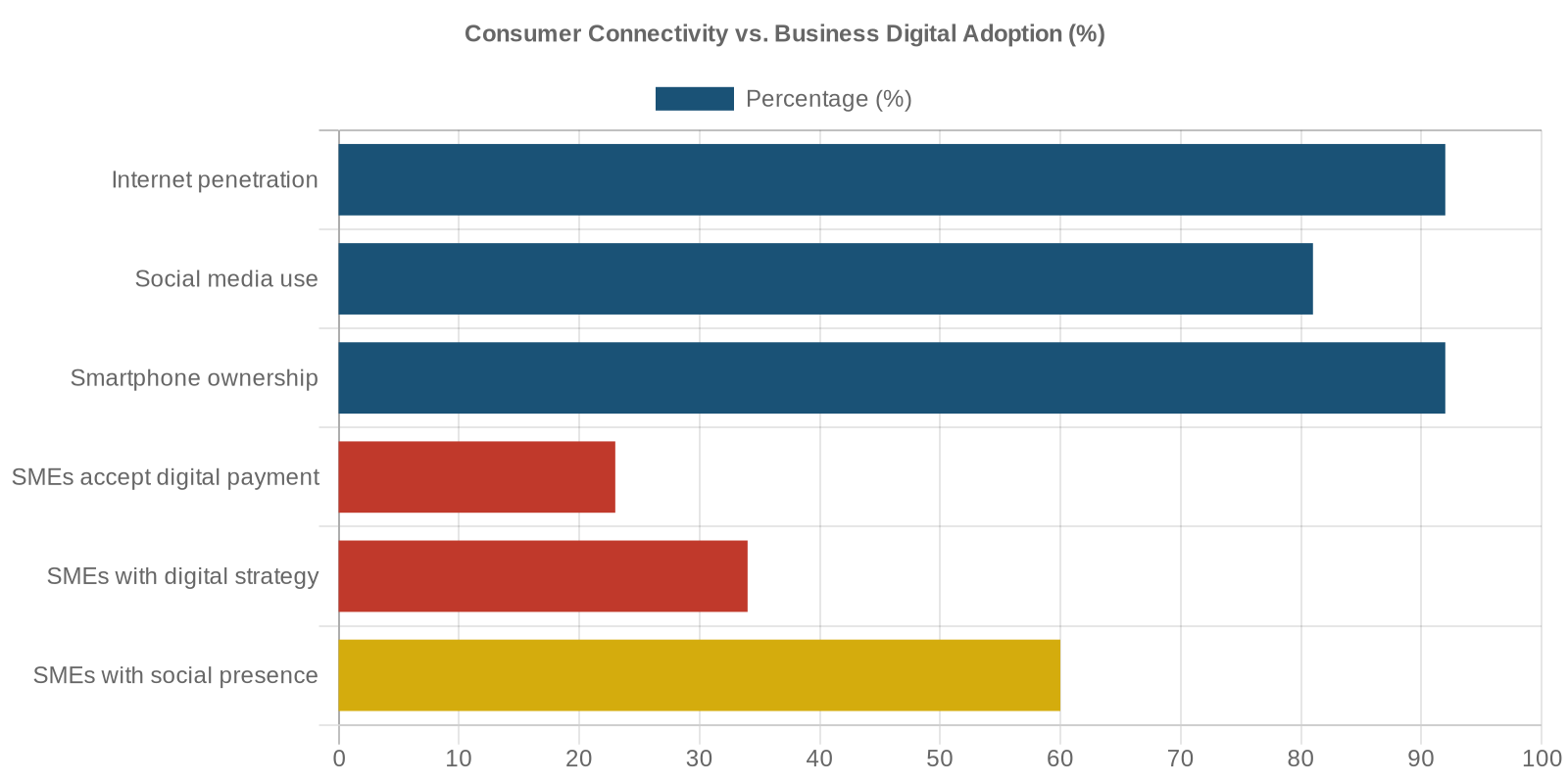
Evidence for the Gap is stark. On the consumer side, Morocco's 92.2% internet penetration places it at the top of the African continent. On the business side, the Mastercard SME Confidence Index found that 77% of Moroccan SMEs do not accept any form of digital payment. This inversion produces a specific and commercially important result: Moroccan consumers are ready to engage with brands digitally, but the infrastructure to capture that engagement as revenue is largely absent.

The Reach–Revenue Gap
Figure 2: The Reach–Revenue Gap: consumer connectivity vs. business digital adoption in Morocco

4. Benchmarking Morocco Against Peer Markets

To contextualise Morocco's position, it is useful to separate behavioural maturity (how consumers use digital) and commercial maturity (the scale and sophistication of money flowing through the digital advertising ecosystem).

Market Comparisons (2025)

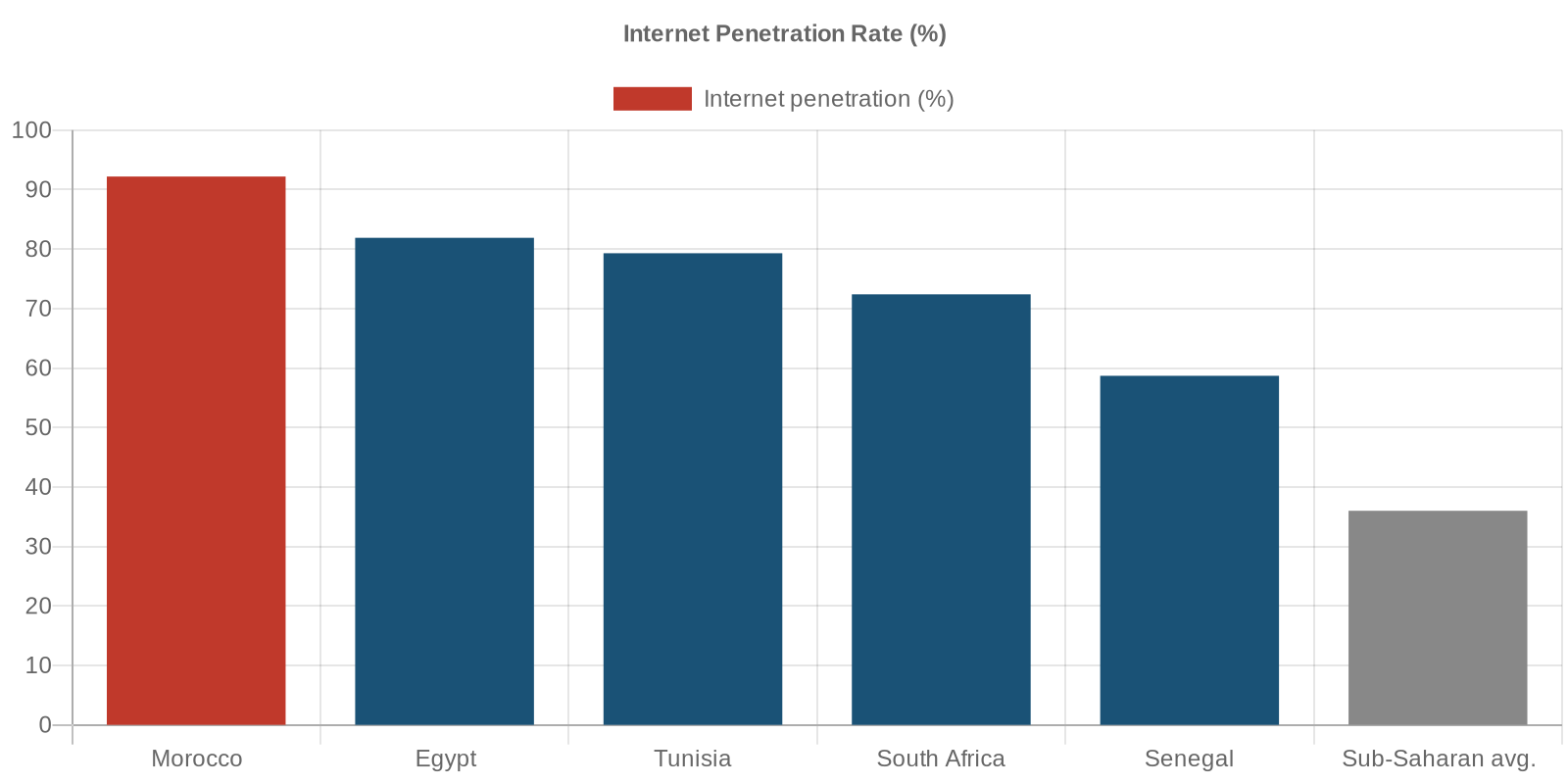
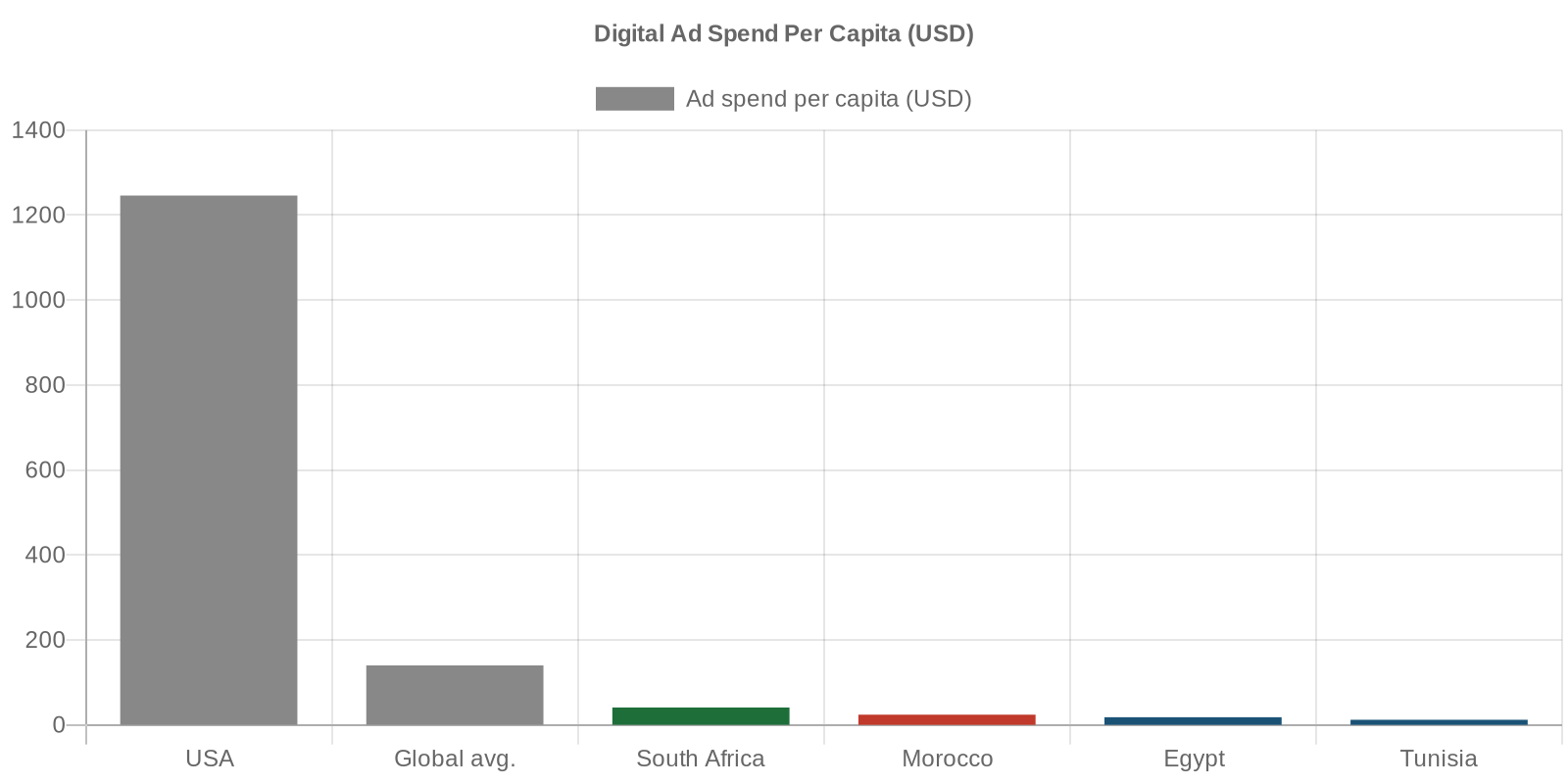
• Morocco: 92.2% internet penetration, $24 digital ad spend per capita. • Egypt: 81.9% penetration, $18 per capita. • South Africa: 72.4% penetration, $41 per capita. • Global average: 67.1% penetration, $140 per capita.

Internet penetration rate comparison
Figure 3: Internet penetration rate comparison: Morocco vs. selected African and MENA markets
Digital advertising spend per capita
Figure 4: Digital advertising spend per capita (USD)

5. The Conversational Leapfrog: WhatsApp and TikTok as the Real Sales Funnel

The most significant and least-documented feature of Moroccan digital commerce is that it is leapfrogging the Western web funnel entirely. In high-income markets, the canonical customer journey runs from awareness through a website to a digital checkout. In Morocco, the dominant journey runs from discovery (TikTok or Instagram) to conversation (WhatsApp) to cash-on-delivery, bypassing a conventional e-commerce site altogether.

WhatsApp as commercial infrastructure

WhatsApp is the spine of Moroccan digital commerce. It is used by 75% of the entire population, with 95% of those users opening the application daily.

TikTok: explosive reach, structurally constrained monetisation

TikTok's adult advertising audience in Morocco grew to 16.7 million users. However, a critical structural constraint limits its commercial potential: TikTok Shop's native social-commerce checkout is not officially available in Morocco as of mid-2026. As a consequence, TikTok in Morocco remains largely organic and consumer-driven.

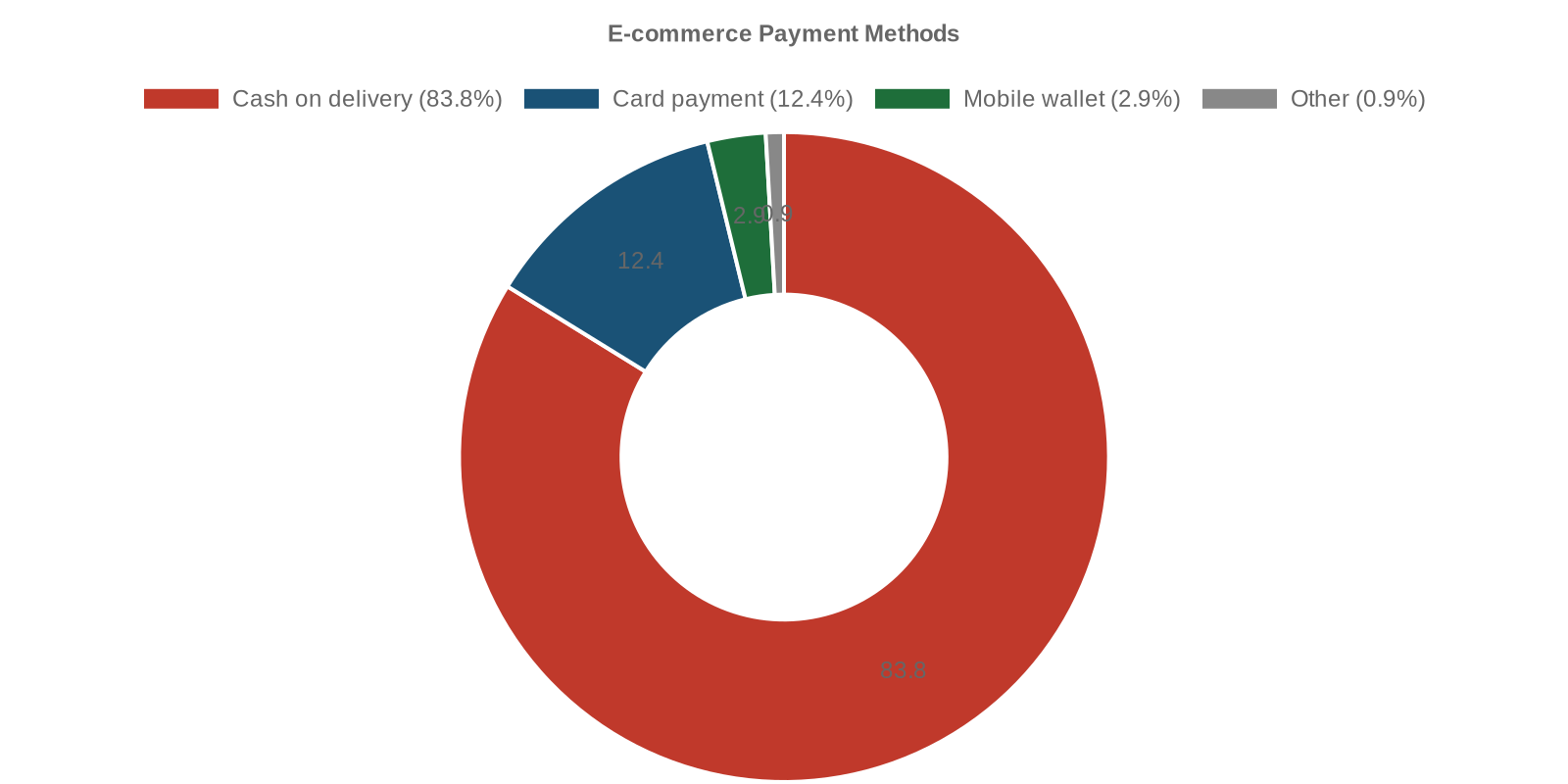
Payment method breakdown
Figure 5: Payment method breakdown for e-commerce transactions in Morocco

6. Morocco's Deepest Moat: Linguistic Fragmentation and Content Strategy

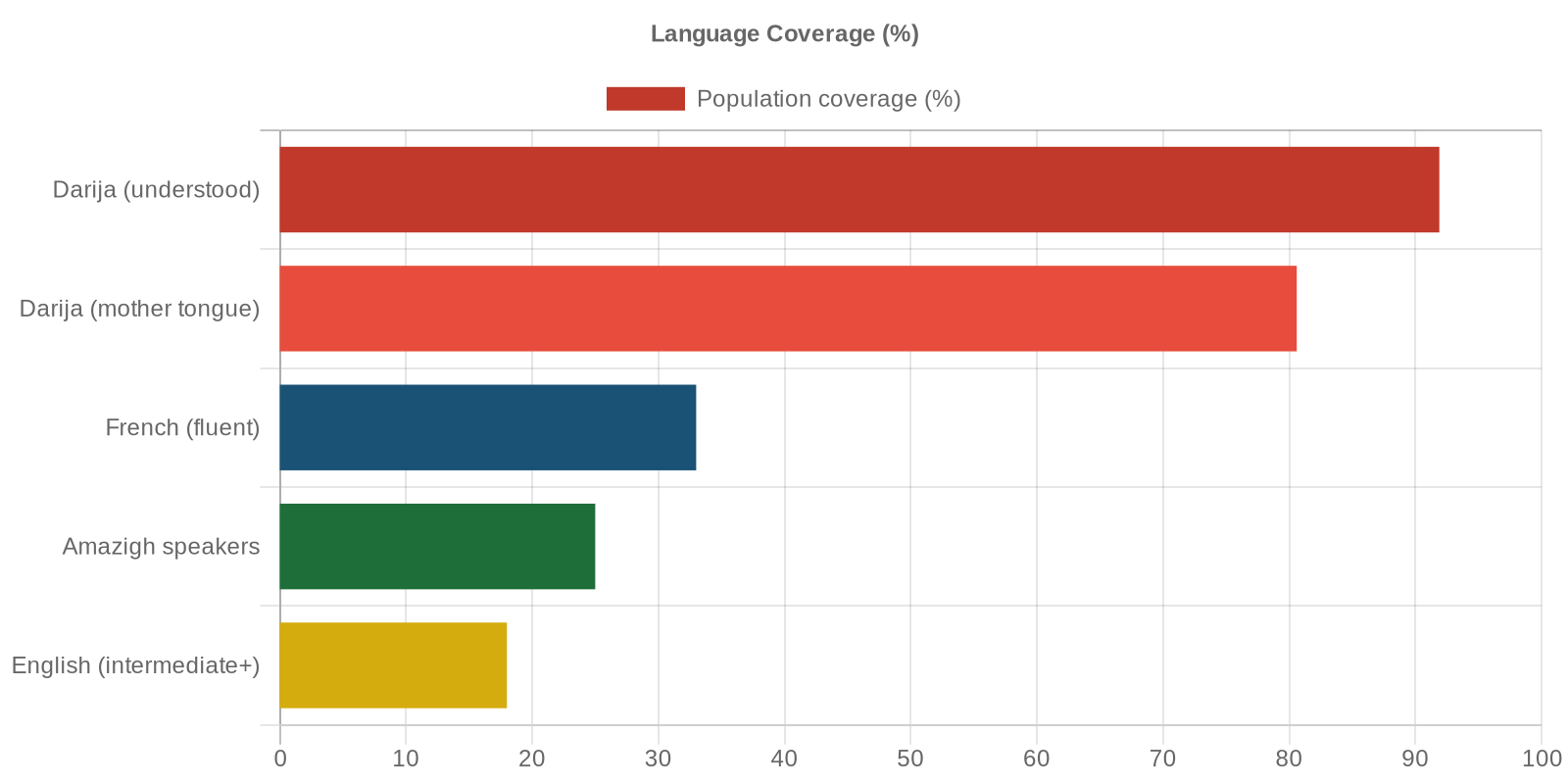
Content strategy in Morocco must simultaneously navigate five language codes. Darija (Moroccan Arabic) is the mother tongue of 80.6% of the population. Modern Standard Arabic (MSA) is the language of formality. French remains the dominant language of business. Amazigh carries its own Tifinagh script. English is rising rapidly among digitally-native youth.

Language landscape of Morocco
Figure 6: Language landscape of Morocco: population coverage and commercial register

The marketing consequences are concrete:

  • Search and SEO must target hybrid, code-mixed queries rather than clean single-language keywords.
  • Paid social creative must be register-matched: MSA or French for authority, Darija for emotional resonance.
  • Community management in Darija, including culturally-specific humour and reference, builds proximity.

7. Influencer Marketing: Real, Growing, Structurally Under-Measured

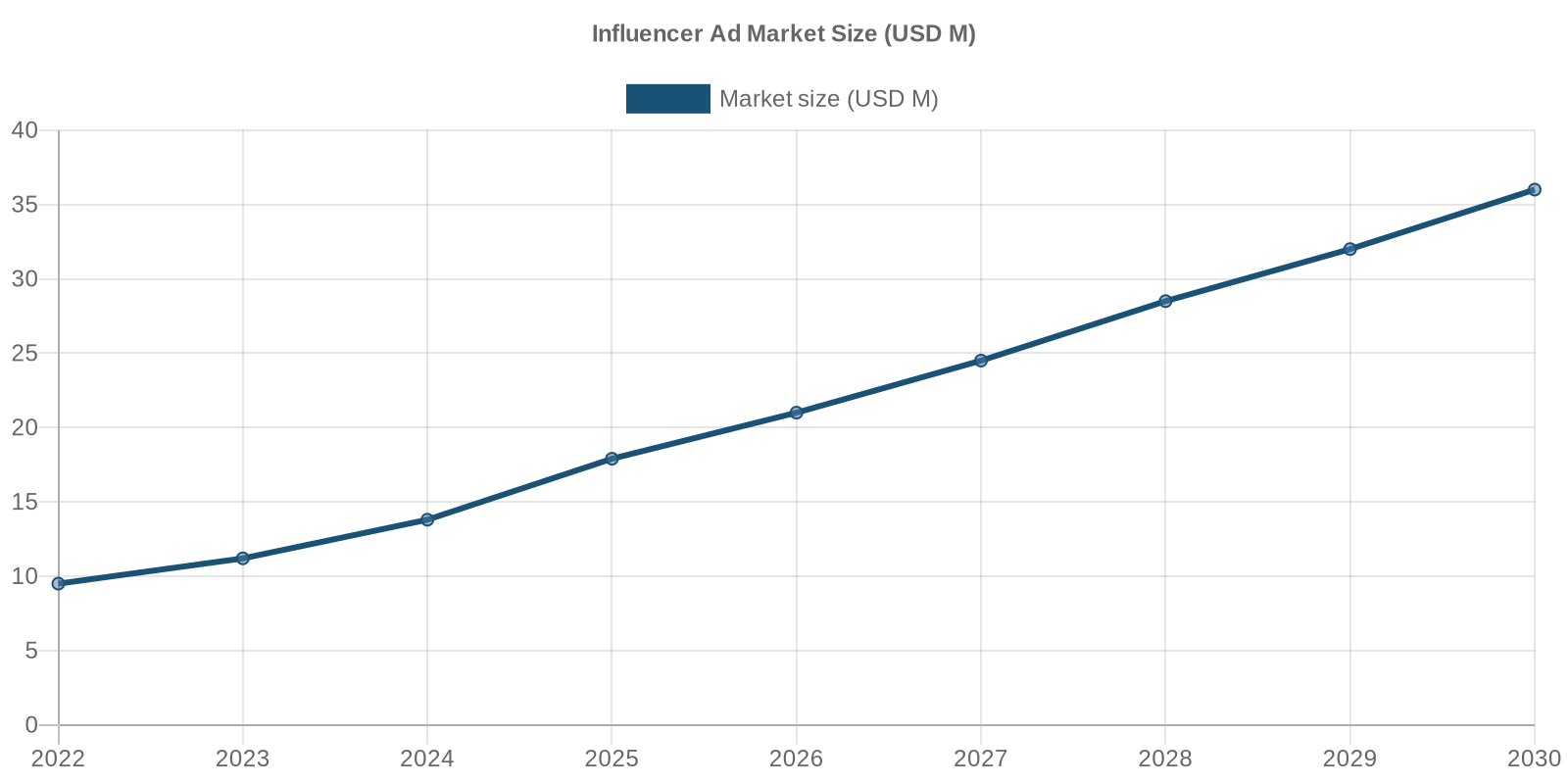
Morocco's influencer economy mirrors the broader Reach–Revenue Gap: it is culturally powerful and commercially under-structured. The influencer advertising segment was valued at approximately US$17.9 million in 2025, projected to reach US$36 million by 2030.

Morocco influencer advertising market size
Figure 7: Morocco influencer advertising market size: actual and projected (USD M)

8. The Mega-Event Window: AFCON 2025 and the 2030 FIFA World Cup

Morocco is entering a historically concentrated period of sports-driven global attention that will accelerate digital marketing maturity faster than organic growth alone would produce.

9. Strategic Framework: Closing the Reach–Revenue Gap

The following three-stage framework integrates the evidence presented above into actionable guidance for businesses.

Stage 1: Capture the Conversation (0–3 months)

Build WhatsApp Business as the primary sales channel: structured catalogue, automated flows, named response-time targets. Accept at least one digital payment method.

Stage 2: Professionalise and Measure (3–9 months)

Implement register-matched content. Track cost-per-delivered-order, confirmation rate and COD return rate. Move influencer spend onto performance-based marketplaces.

Stage 3: Integrate and Scale (9–24 months)

Integrate WhatsApp, social ads, influencer and web data into a single CRM for full revenue attribution. Prepare TikTok Shop-ready catalogue infrastructure.

10. Conclusion

Morocco presents a rare and commercially important anomaly: a market that is consumer-ready for sophisticated digital marketing at scale, but where the business infrastructure to monetise that readiness remains nascent. The gap is an arbitrage to be captured from the inside, by firms that build the revenue layer that the market's consumer side is already waiting for.

Ready to build the future of your business?

Pick a date on the calendar to start your free 30-minute strategy session.

August, 2026

S
M
T
W
T
F
S

Trusted by industry leaders

VortexQuantraMeridianRusso