Loading articles / Chargement des articles…
All articles
AI Adoption for Moroccan Businesses: 2026 Guide
OECD and World Bank data show a widening AI adoption gap. Read what 2026 signals mean for Moroccan leaders and how an AI agency Morocco can accelerate your automation.

Abstract
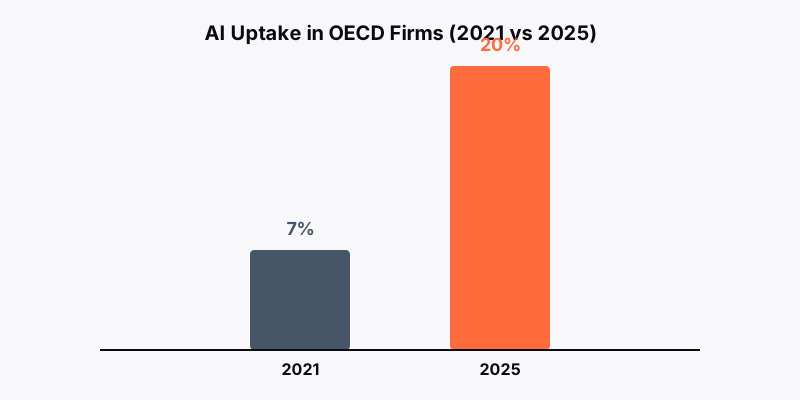
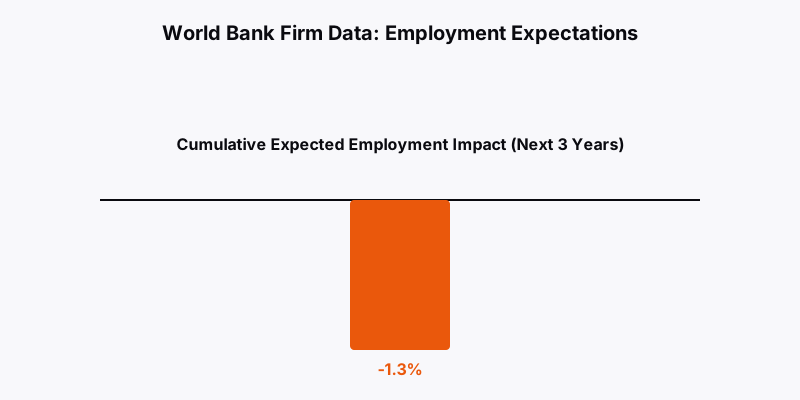
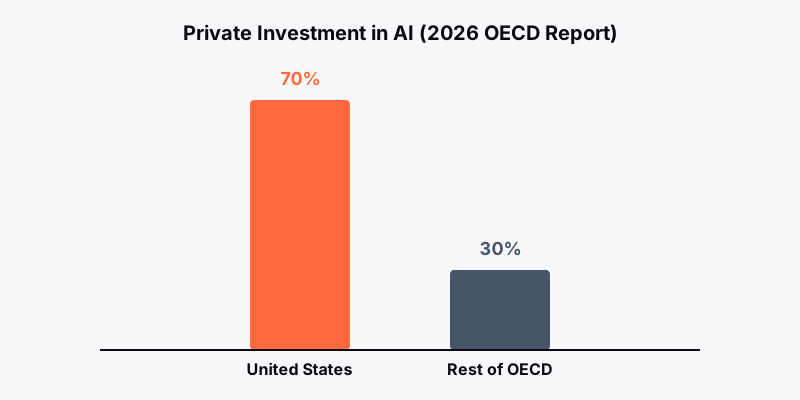
The OECD and World Bank reveal accelerating AI adoption (reaching 20%) and a major investment gap where the United States outspends the rest of the OECD combined. Global firms expect a mild employment effect (-1.3%) over the next three years. Meanwhile, Morocco ranks 42nd globally with a projected adoption rate of 16% by late 2025, highlighting the urgency for digital transformation Morocco.
1. The investment gap that's widening fast
CoreMedia, as a leading AI agency Morocco, closely monitors global automation trends. According to the official intergovernmental report by the OECD (2026), "Artificial Intelligence markets", total estimated AI investments in the United States are more than twice those of all other OECD countries combined in 2025.
Key Metric
2×: US AI investment is more than double the rest of the OECD combined.
2. How quickly firms are adopting AI
Related Articles
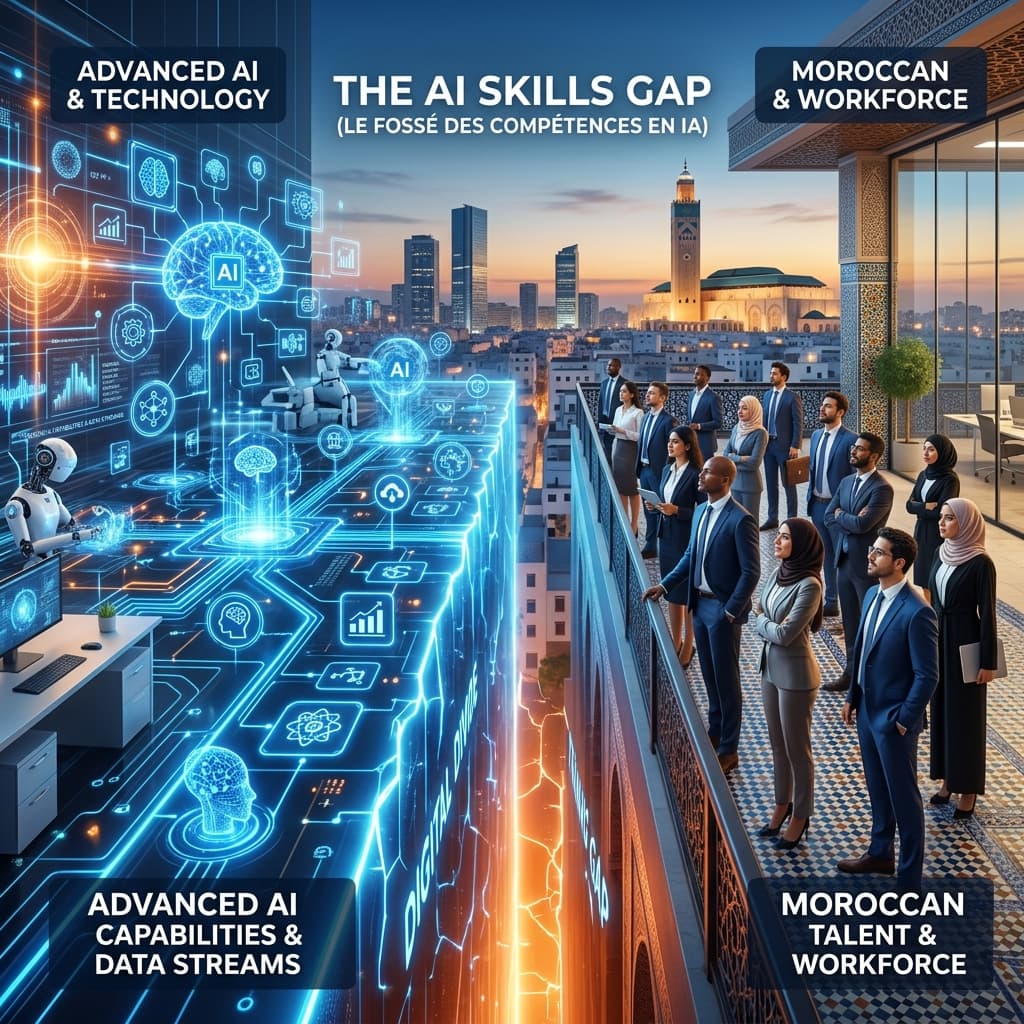
Morocco's AI Skills Gap and Business Productivity
July 2026 OECD and World Bank data reveals how the AI skills gap is creating a productivity ceiling for Moroccan businesses. A practical framework for workforce upskilling.
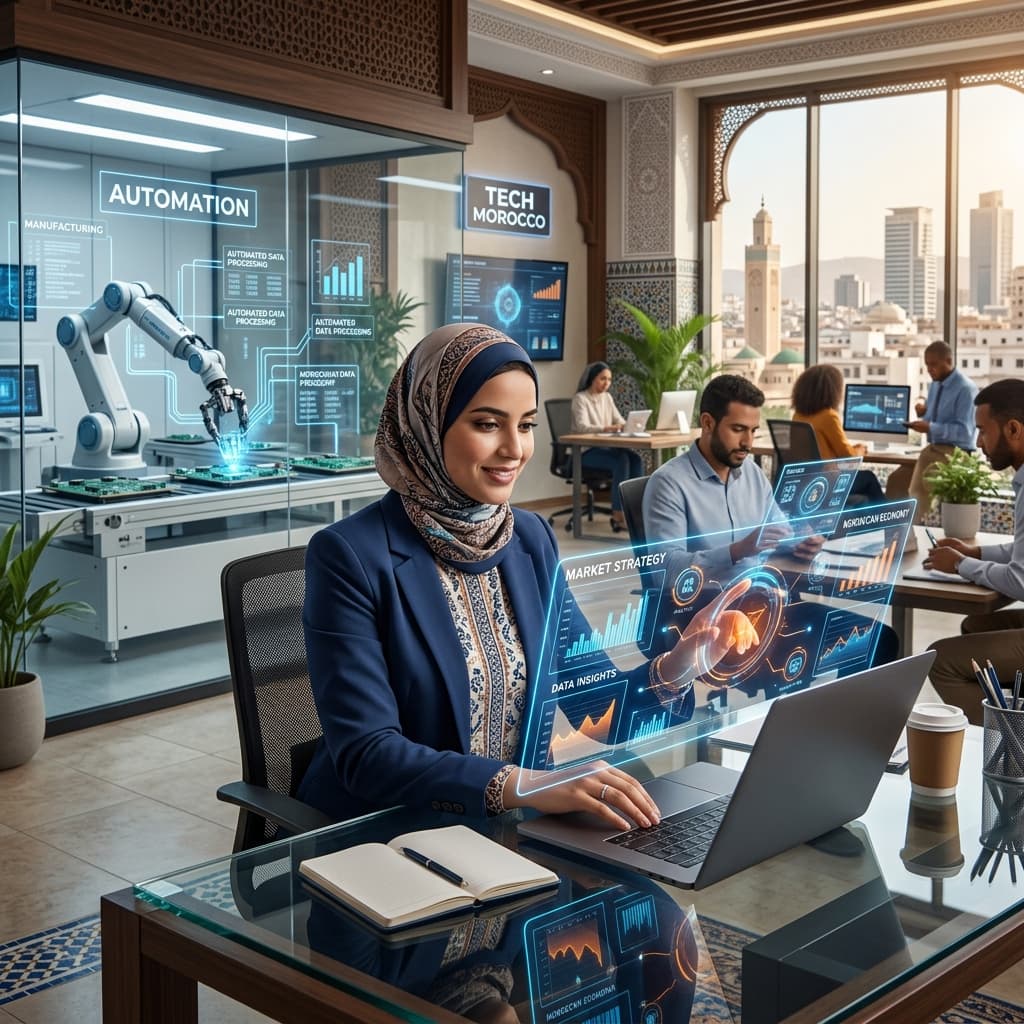
Automation vs Augmentation in Morocco: 2026 Strategy
The World Bank reveals a decisive asymmetry between automation risk (4.5%) and augmentation potential (16.2%) in developing economies. Here is how Moroccan business leaders can translate this finding into concrete strategy.

AI and Morocco's Regional Productivity Gap
OECD microdata (July 2026) shows AI benefits productive regions first. For Morocco, this risks deepening territorial disparities. Scientific analysis, regional scenarios, and a strategic framework for business leaders.
Related articles
Morocco's AI Skills Gap and Business Productivity
July 2026 OECD and World Bank data reveals how the AI skills gap is creating a productivity ceiling for Moroccan businesses. A practical framework for workforce upskilling.
Automation vs Augmentation in Morocco: 2026 Strategy
The World Bank reveals a decisive asymmetry between automation risk (4.5%) and augmentation potential (16.2%) in developing economies. Here is how Moroccan business leaders can translate this finding into concrete strategy.
AI and Morocco's Regional Productivity Gap
OECD microdata (July 2026) shows AI benefits productive regions first. For Morocco, this risks deepening territorial disparities. Scientific analysis, regional scenarios, and a strategic framework for business leaders.
Ready to build the
future of your business?
Pick a date on the calendar to start your free 30-minute strategy session.
October, 2026
S
M
T
W
T
F
S
Trusted by industry leaders
Selected clients, published with permission. More references will be added after approval.